
During February and April 2020 computer science teacher Olha Doskochynska and her students participated in a project based on bioeconomics.
I got acquainted with the concept of bioeconomics by studying in 2019 the online course of the European Academy of School Networks "Enhancing Knowledge on Bioeconomics in Schools" and learning how I can research sustainable economic decisions with my students! Because knowledge of bioeconomics is an important requirement for 21st century students.
This year, I and my students are participating in Stam Week
Since the pandemic and the spread of Covid-19 schools in our country are closed, all education is going on the Internet, so we have to continue the lessons and the project on bioeconomics online in early March.
We spent some of our lessons in school, and some of our online lessons in Zoom.
I created lessons based on one of the scripts from the Bloom school box and taught these lessons to students aged 13-16 (20 students working in 5 groups)
This training scenario aims at a comprehensive understanding of the bioeconomy by connecting examples of daily life to the topic and then further developing it into a whole project.
This training scenario is divided into three parts.
The first part introduces students to the concept of bioeconomics. We started working in the classroom and continued online
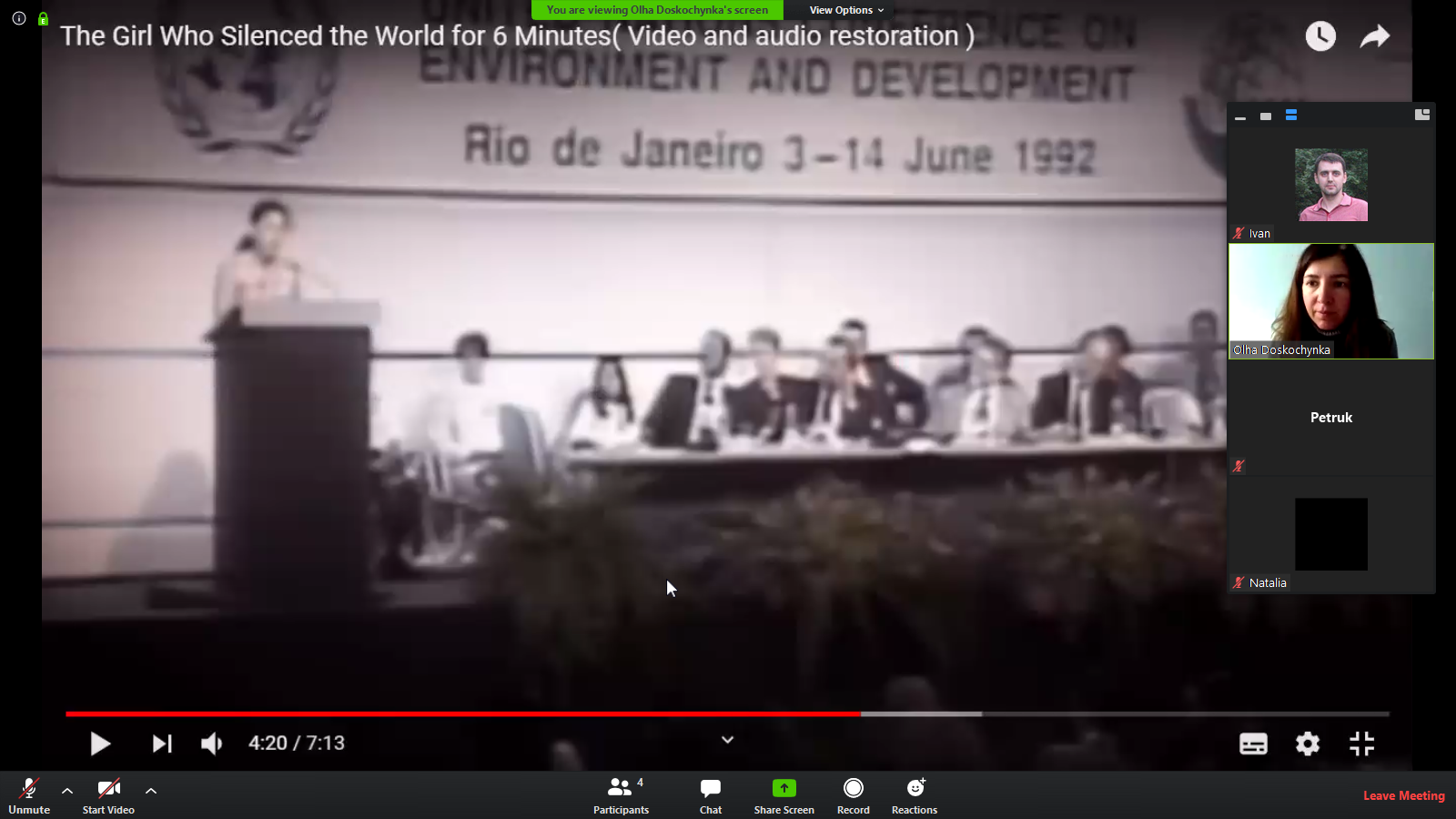

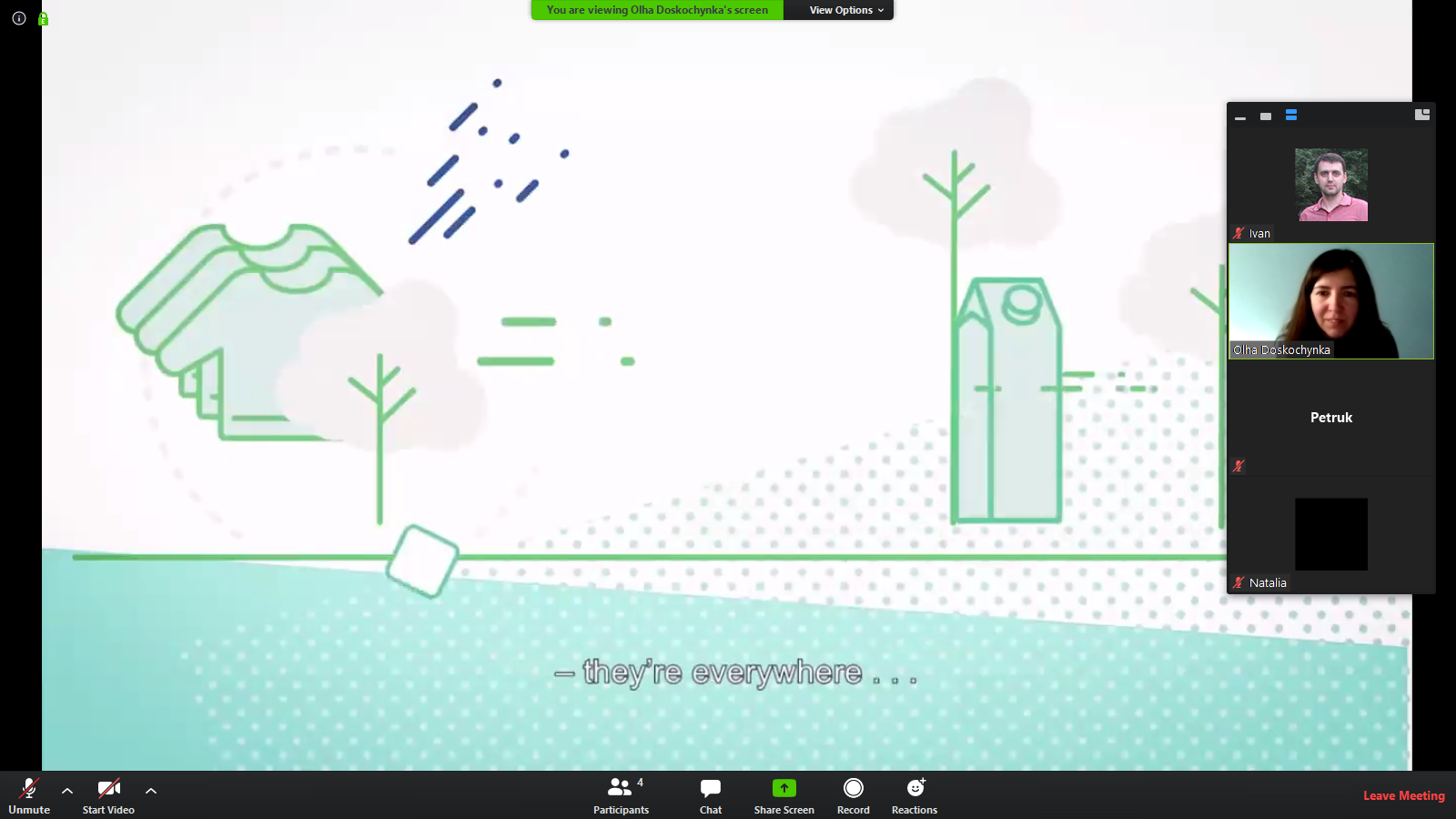
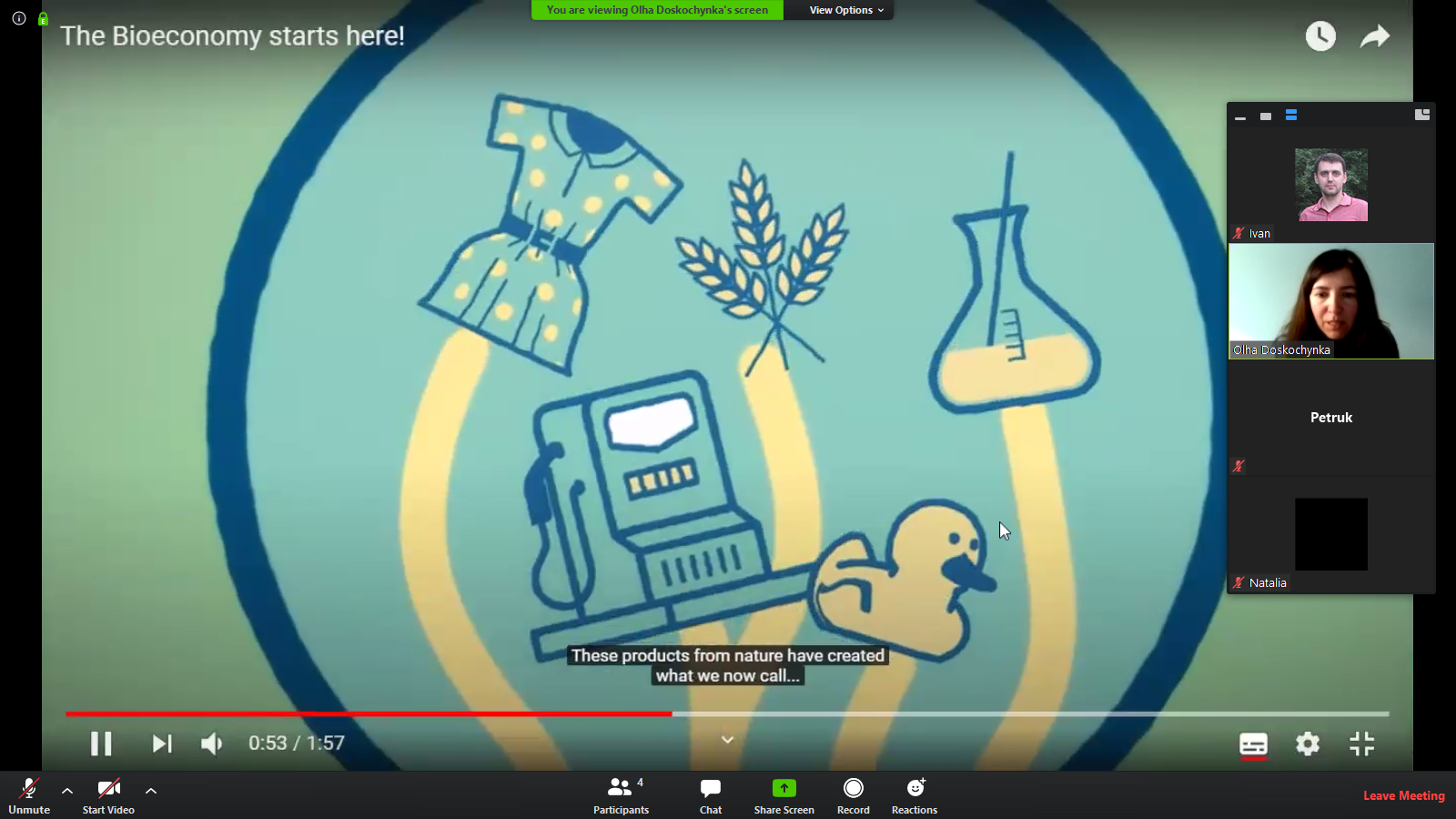
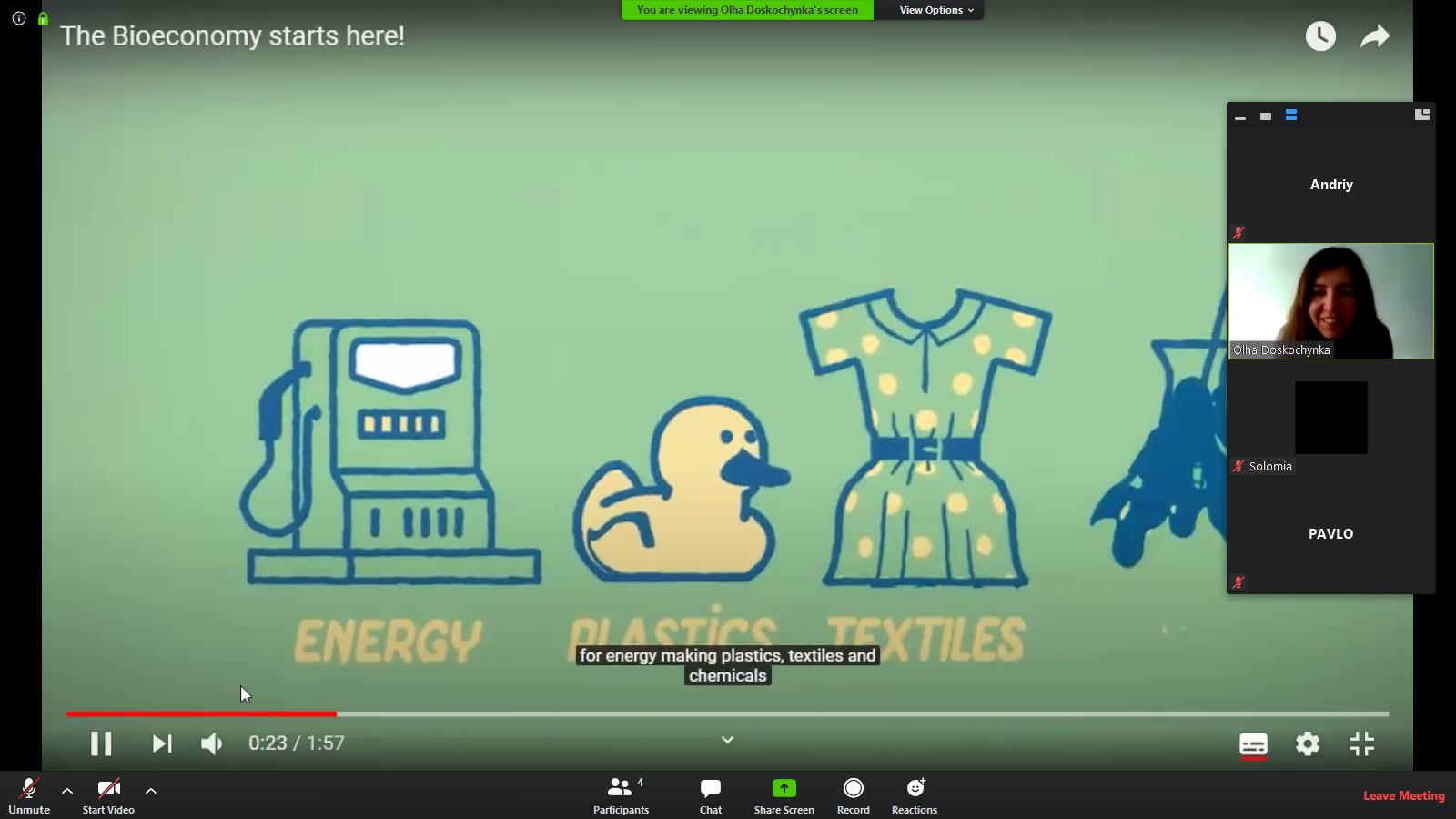
After watching a short video on bioeconomics, students are given different objects that they have to classify according to their biological or non-biological. Students group into groups and work through the following questions on a common whiteboard

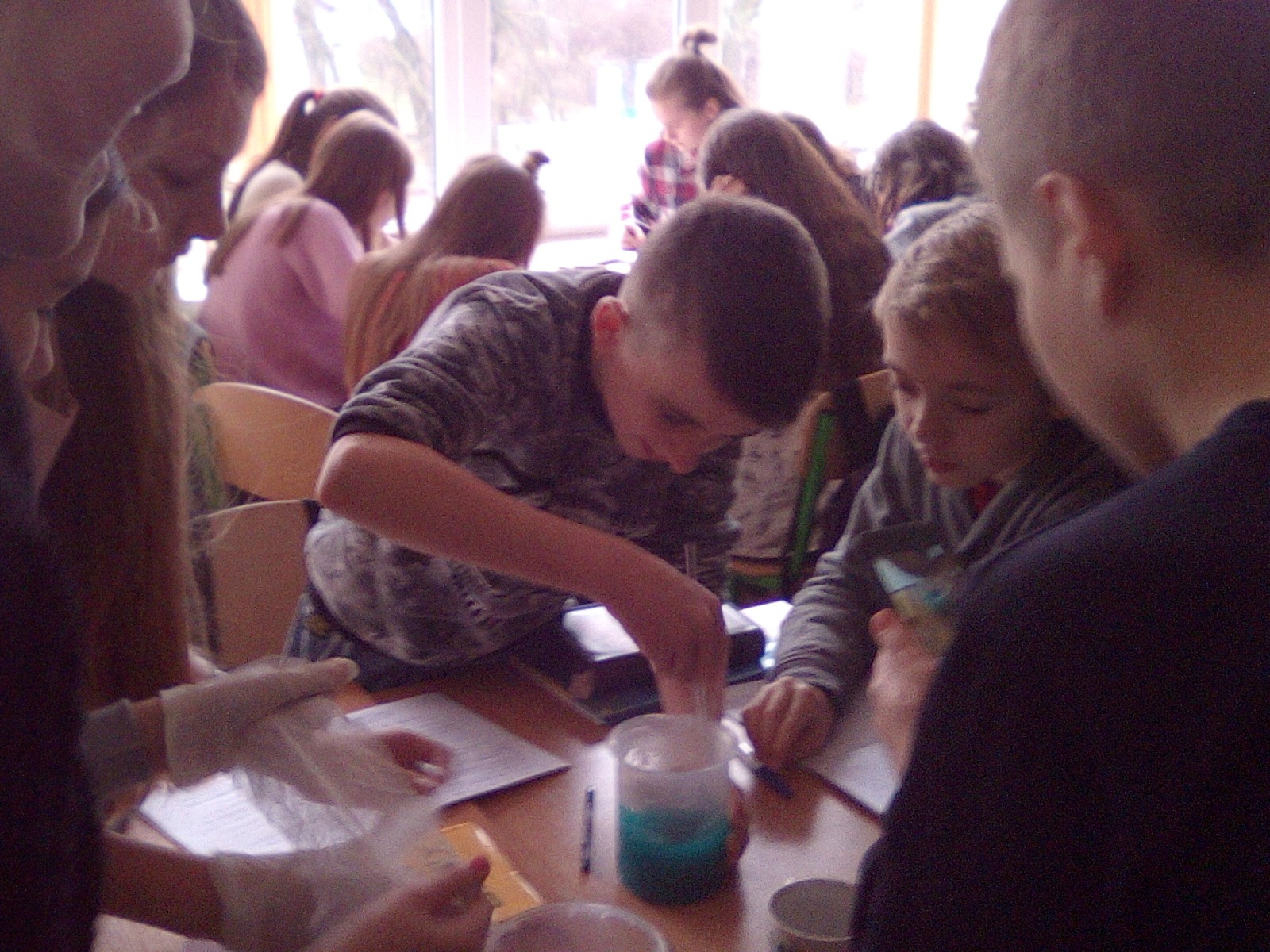
Since we started our work at school, students have been able to conduct experiments in school class. The second part involves the production of glycerol soap.



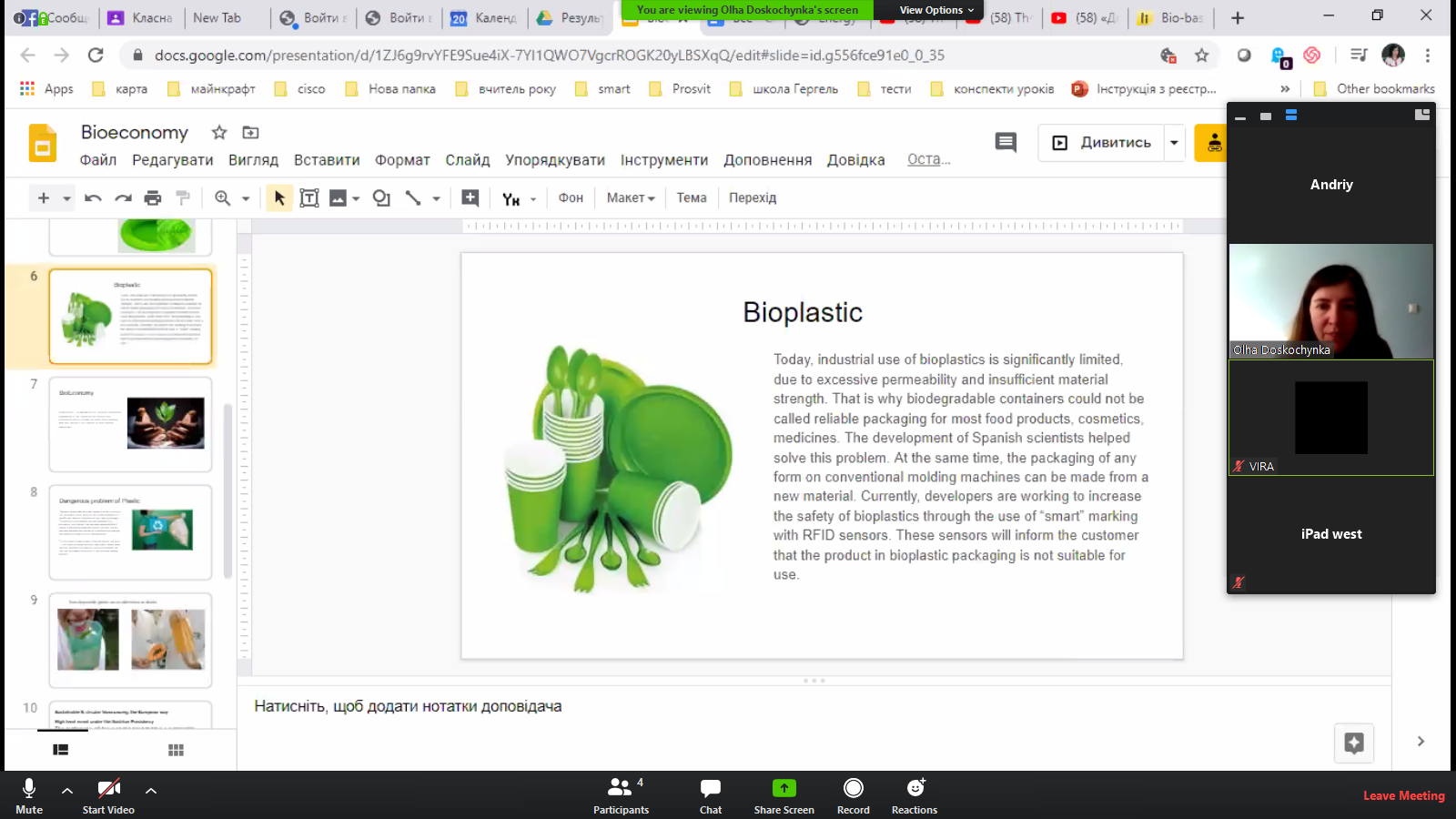
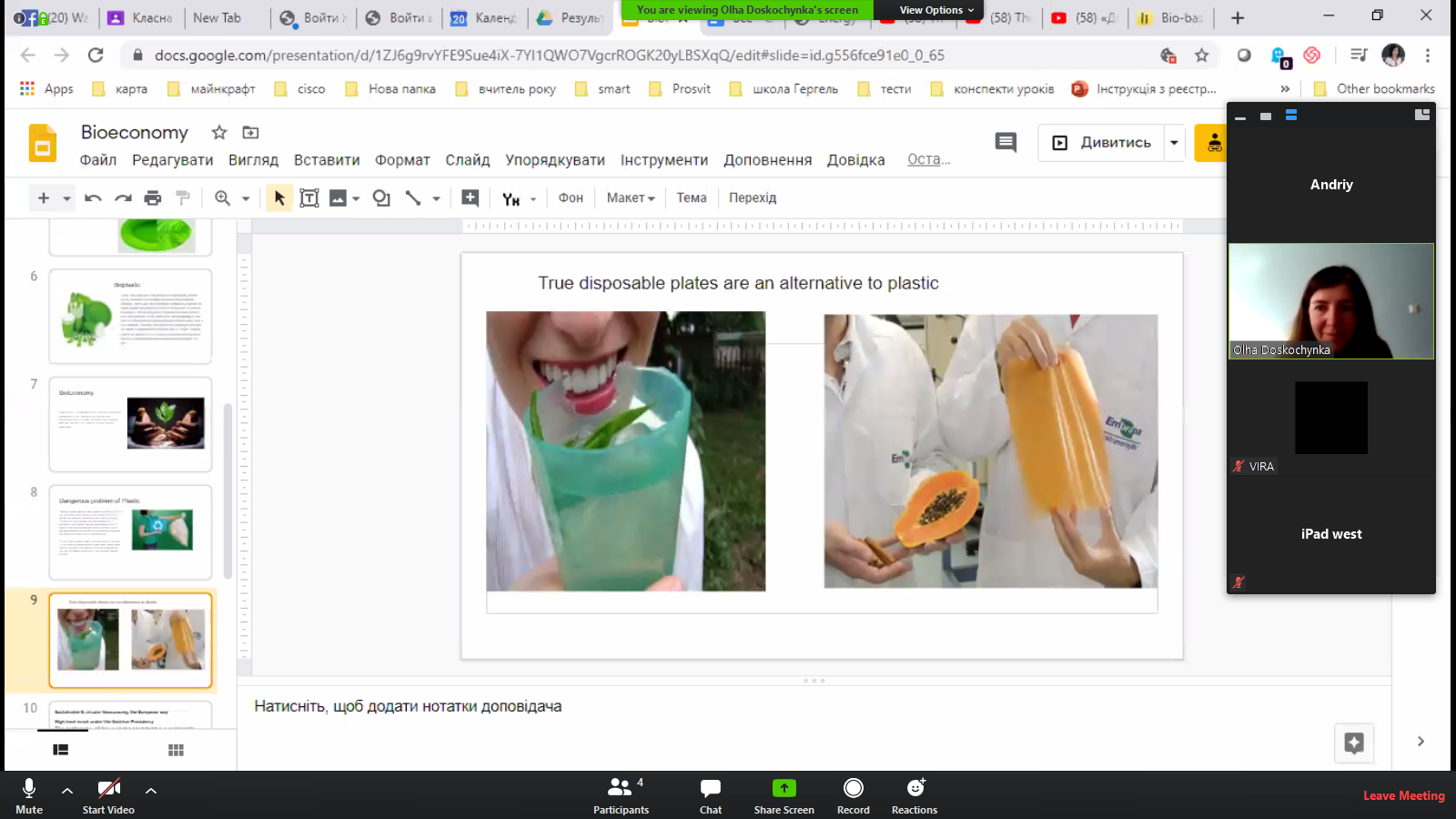
During the Second Online Zoom Meeting, students were tasked with creating their work in a shared Google presentation

Students create posters in Canva
At the last Zoom Meetings will be presenting their bio product ads.
Work in groups and create posters
The third part is for younger students to plan an online exhibition or science fair; for senior students: zoom in on meetings and collaborate on bio-based products
Pupils who lacked internet and technical facilities created posters at home
link to the presentation
Students' work:

https://docs.google.com/document/d/1RKW_eMvf6ipwQ_i_hP882RjqKX1SPuEdmhnthWsGyJY/edit
Mentimenter

Linoit

Kahoot





